FeaturedEngineering
Choose the right storage for your Blaxel agents
Blaxel agents have three storage options: the sandbox filesystem, volumes, and Agent Drive. Understand what each option does and when to use it.
June 2, 202612 min
Read article
A technical blog to share engineering deep-dives, Blaxel updates, and general guides on agentics.
Runwork leverages Blaxel's perpetual sandboxes and custom images to run low-latency, stateful AI agent workflows for enterprise teams without infrastructure overhead.
Corvera built an agentic workforce for CPG brands with Blaxel sandboxes, unlocking a key product feature and achieving 2x faster performance.
Blaxel integrates with Claude Managed Agents as a self-hosted sandbox provider, giving developers full control over code execution, networking, and state while Anthropic manages orchestration.
CodSpeed uses Claude Managed Agents with self-hosted Blaxel sandboxes to optimize customer code and deliver measurable performance improvements.
AI agents can now provision Blaxel accounts and resources through Stripe Projects using your existing Stripe payment methods - no dashboards, manual signup, or credential management required.
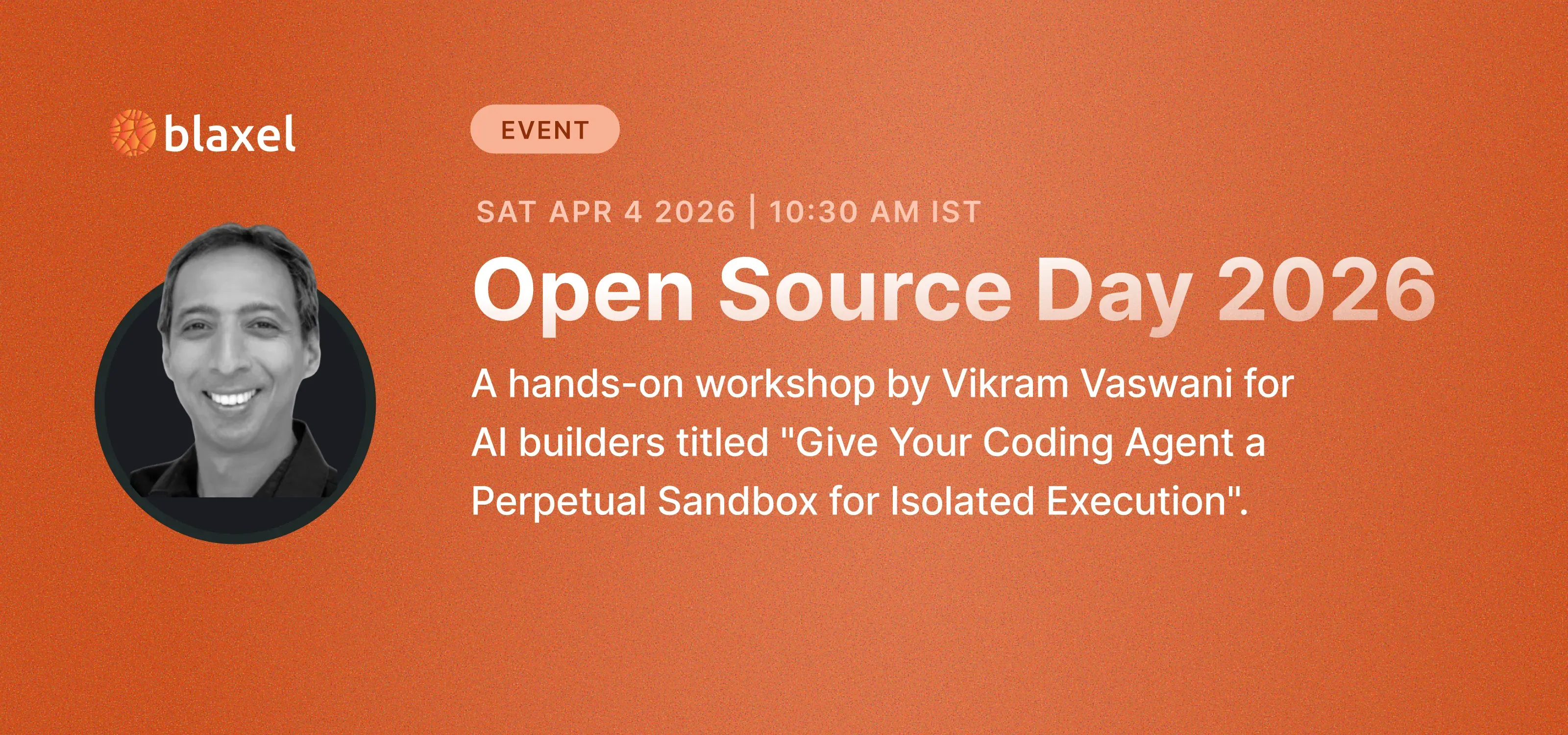
Read a recap of Vikram Vaswani's workshop at Open Source Day 2026.
Blaxel is a first-class sandbox provider in the OpenAI Agents SDK. AI builders can create agents that safely run arbitrary code in fast, isolated sandboxes on Blaxel's high-performance platform.
Learn how sandboxes are built, managed, billed, and cleaned up behind the scenes.
I spoke at the Beyond Skills meetup earlier this week about shared context for agents. Here's the recap.
The Blaxel Agent Skill lets your coding agent autonomously create sandboxes, deploy agents, run jobs, and launch apps - all from a simple prompt.
"Code mode" is now natively supported on Blaxel for OpenAPI-compatible APIs. With this, you can expose any OpenAPI specification to your agents as an MCP server hosted on Blaxel.
Run OpenClaw (formerly Clawdbot, Moltbot) safely inside a Blaxel Sandbox instead of your own computer.
In-depth guides and how-tos on how to run agentics in production.
Stop misaligning vendor evaluations. Learn how sandboxes, runtimes, and code interpreters differ in trust models, isolation, and state persistence.
Learn how to give AI agents persistent memory across sessions using vector databases, persistent sandboxes, and shared filesystems for production workflows.
Cold start latency compounds across agent tool calls, adding seconds of overhead per interaction. Learn how to measure, quantify, and eliminate it.
Compare Blaxel, E2B, Modal, Fly.io, and Cloudflare as Vercel Sandbox alternatives for secure AI code execution in production agent workloads.
Map outbound patterns, pick the right egress control layer, and satisfy SOC 2, HIPAA, and ISO 27001 security reviews for agent sandboxes.
Learn hosting approaches for MCP servers in production: self-hosted, serverless, and managed options with security, latency, and scaling guidance.
Learn what first-class TypeScript support means for sandbox SDKs, how to evaluate production options, and how to integrate with Vercel AI SDK and OpenAI.
Standard vendor questionnaires miss sandbox-specific risks. Use this checklist to assess isolation, compliance, data lifecycle, and credentials.
A perpetual sandbox preserves agent state, stops billing during idle, and resumes in under 25ms. Learn how it differs from ephemeral and persistent models.
Compare AI agent runtimes across isolation, state persistence, and resume latency. Find the right platform before infrastructure delays your roadmap.
Compare Depot Remote Sandbox alternatives: Blaxel, E2B, Fly.io, Vercel Sandbox, and Cloudflare Containers for production AI agent workloads.
Compare five sandbox platforms on isolation model, resume latency, state persistence, and concurrency for production AI agent workloads.